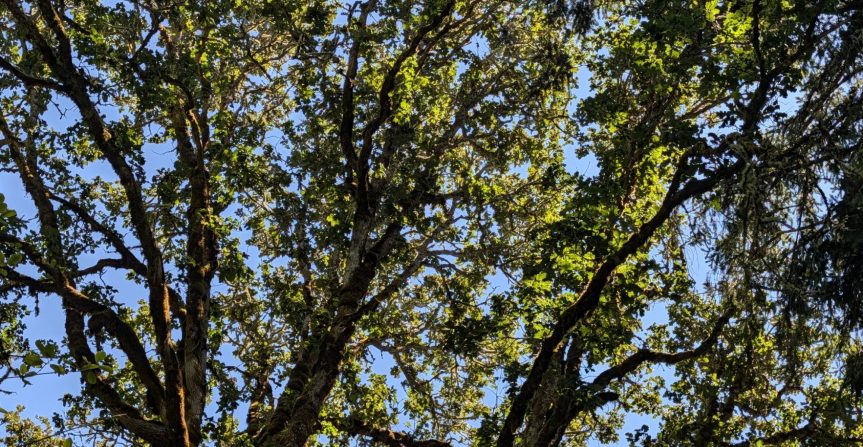
Pictured: Looking up at the branches of an Oregon White Oak tree while on our woods walk 7/19/26.
| This week the wildlife did some unexpected things and many things are starting to set fruit or seeds. Shane had some harvests from his bucket garden and the Phenology Guide has some info on what to harvest so you can plan your preservation! Enjoy! Amy | Table of Contents: ~ Spying on Wildlife: Trail-cam Videos! ~ ~ The Birds: Discovering with the Merlin App ~ ~ Woods Walks: Hidden Finds & Plants ~ ~ The Bucket Garden: Harvesting the Bounty ~ ~ Garden Guide: Phenology at Work! ~ ~ The Funnies: Plant & Nature Humor ~ ~ The Blog: Upcoming Editions ~ |
~ Spying on Wildlife: Trail-cam Videos! ~
Shane accidentally put the creek log trail-cam SD card straight back into the camera instead of bringing it to the house. Because of that, we only had videos up through July 4th before the battery died!
I just went through the footage on Sunday and found this crazy bunny. Somehow, it decided to climb the log to cross the creek—not once, but twice! Who knew brush bunnies felt like climbing?
~ The Birds: Discovering with the Merlin App ~
Mom’s ‘bird-tree’ has been visited frequently by House Sparrows, Black-Headed Grosbeak, California Scrub Jay, and Collared Doves. We did see some American Goldfinch stop by but they were skittish and didn’t stay long enough to see the Nyjer seed feeder.
While we sat down by the creek, Sunday, we had a lot of fun watching the Wood Peewees landing on branches around us, flying out to catch bugs, and landing right back in the same spot over and over. It was oddly quiet down there as the Song Sparrows and Swainson’s Thrush songs were almost non-existent! We were able to hear the Red-Breasted Nuthatch all around us. I guess we’ve gone from the season of the Sparrows and Thrush to the season of the Peewee and Nuthatch as far as birdsong goes!
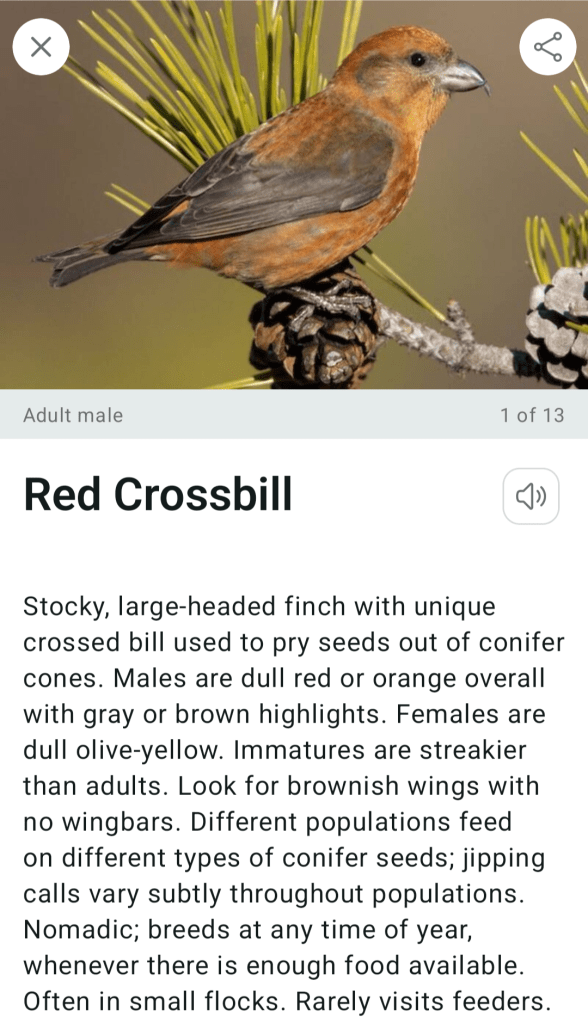
Shane and I managed to both get a life-bird when we spotted a Red Crossbill in the trees nearby while on our woods walk. We saw it come up on the Merlin app so were on the lookout for it. We for sure saw a juvenile and a female.
~ Woods Walks: Hidden Finds & Plants ~
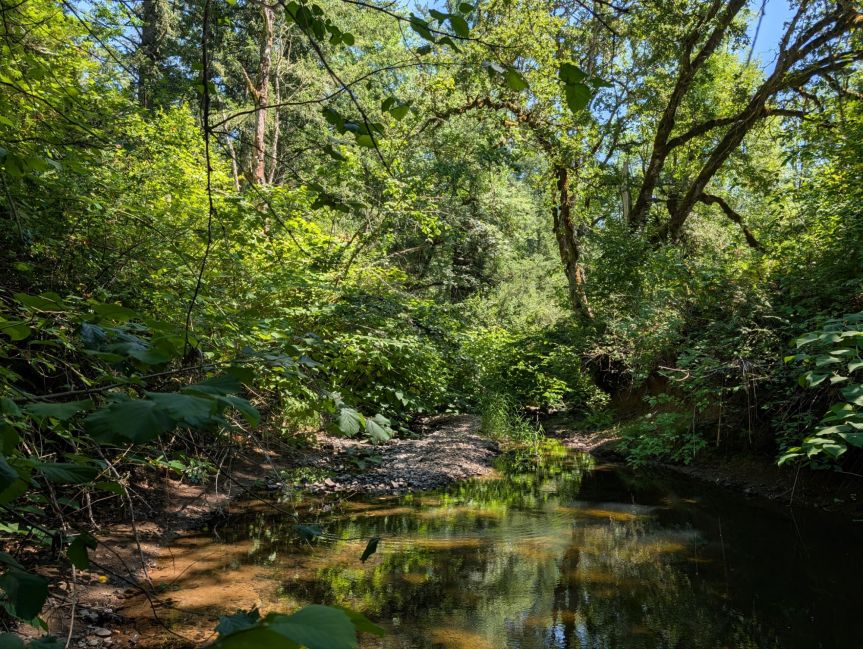
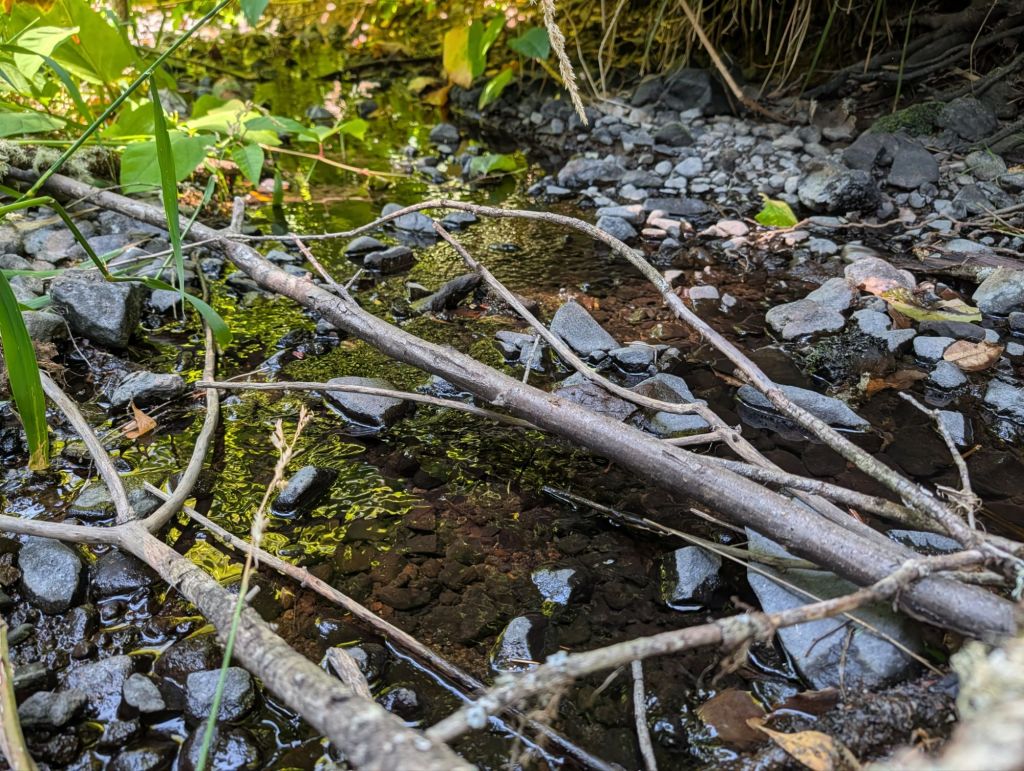
The creek is very quiet as it’s barely trickling along, yet it still holds a surprising amount of water. I even spooked a frog and caught a glimpse of a few minnows swimming around the shallow pools.
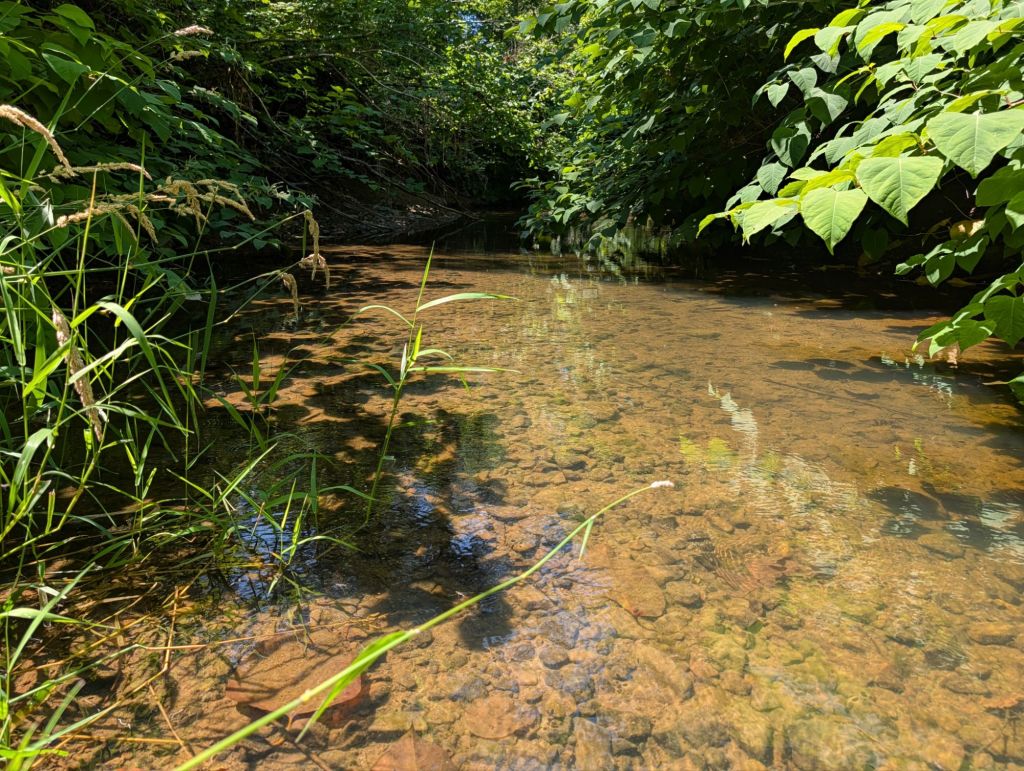
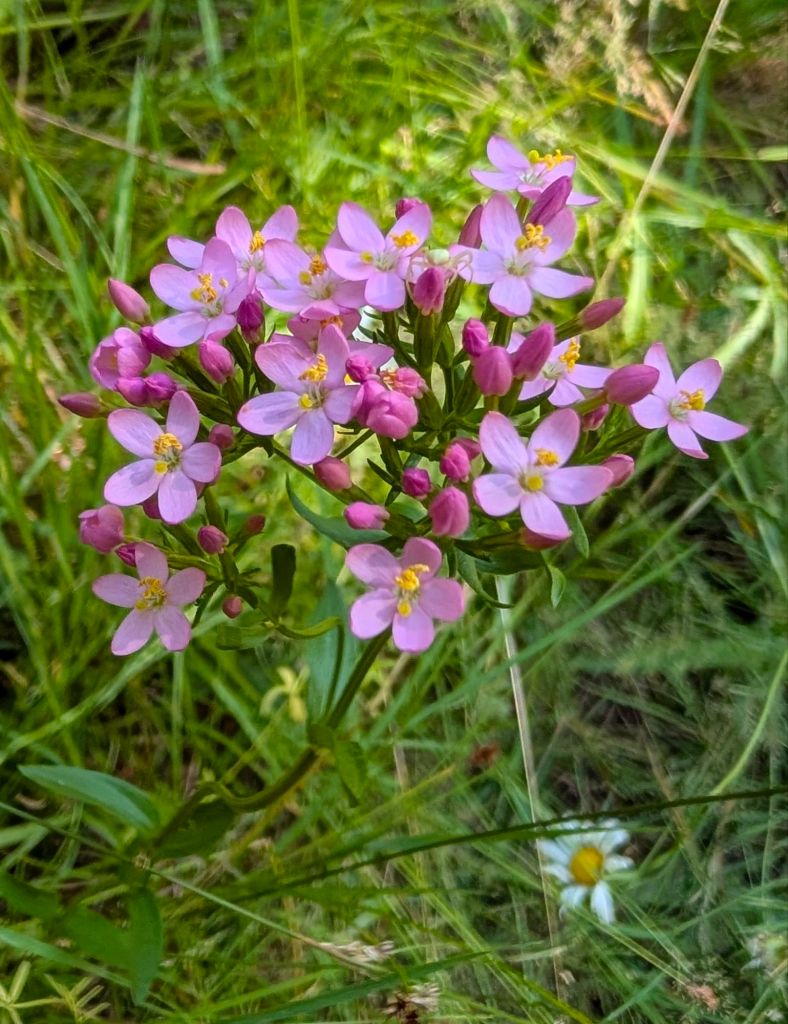
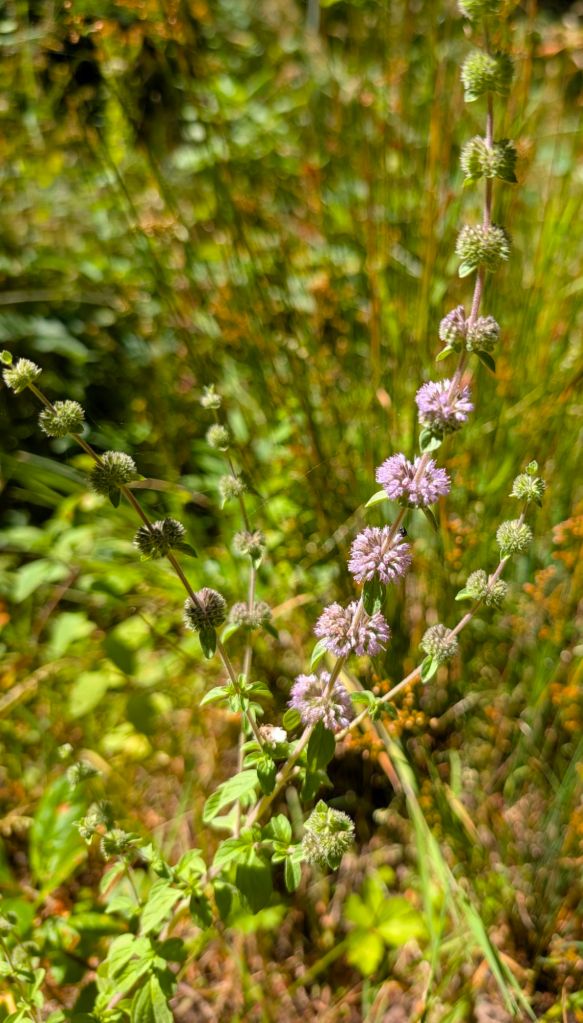
In Active Bloom:
- Common Centaury (Centaurium erythraea)
- Pennyroyal (Mentha pulegium)
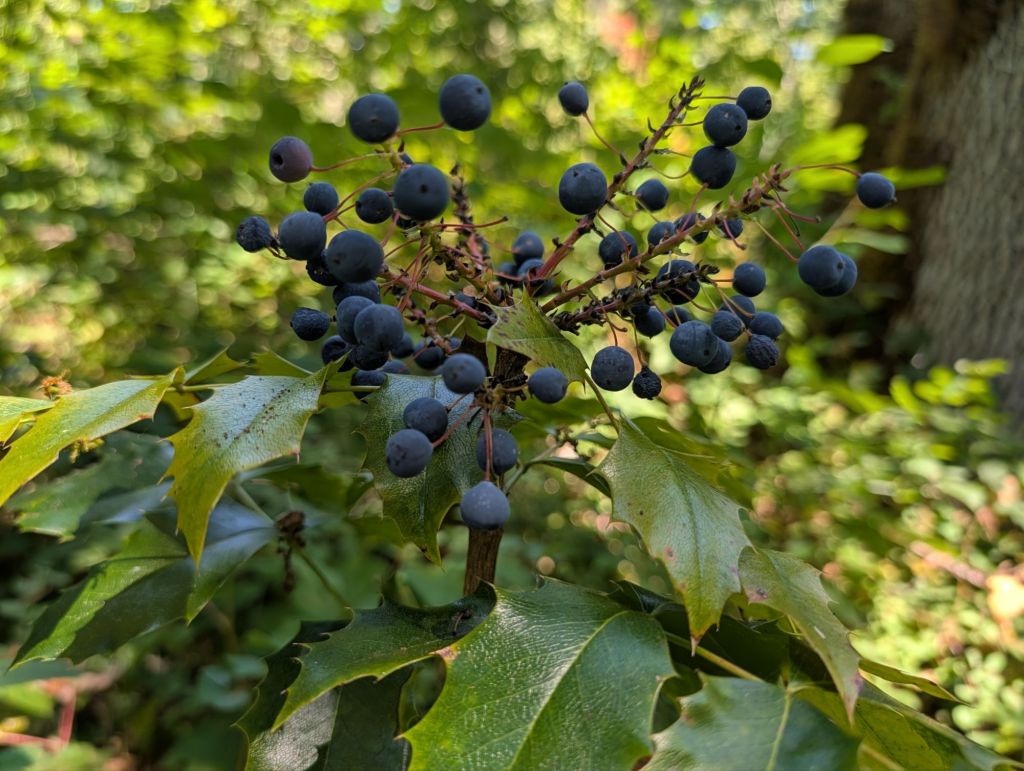
Fruit/Seed Ripening:
- Oregon Grape (Berberis aquifolium) — starting to wither
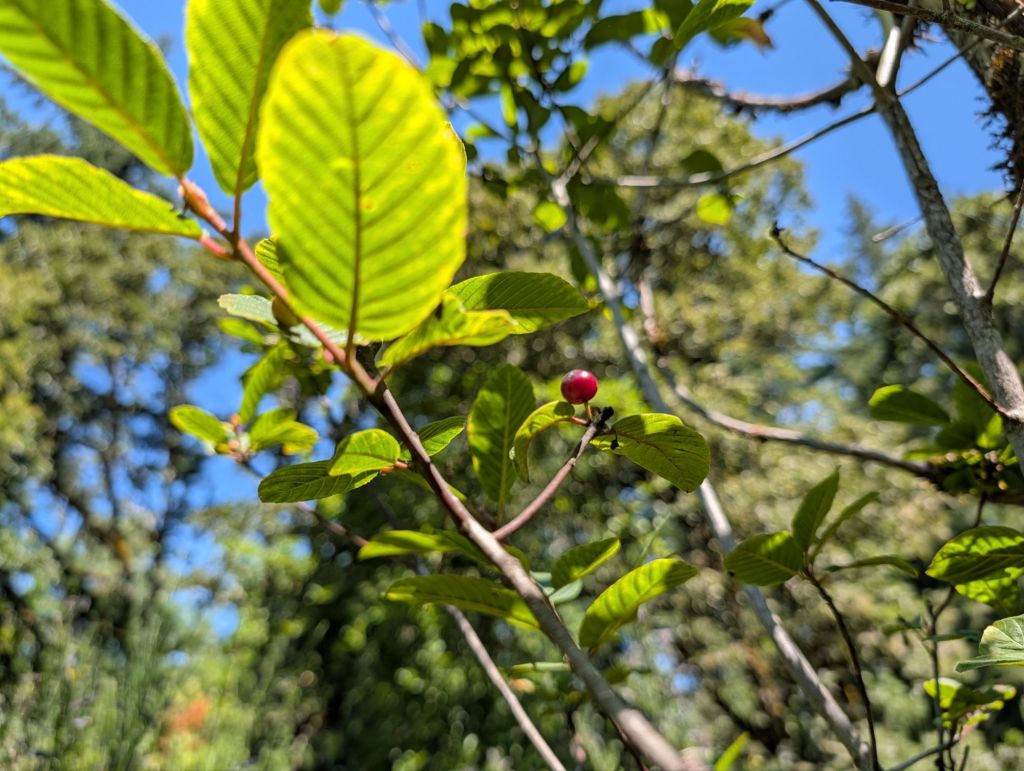
- Cascara (Frangula purshiana)
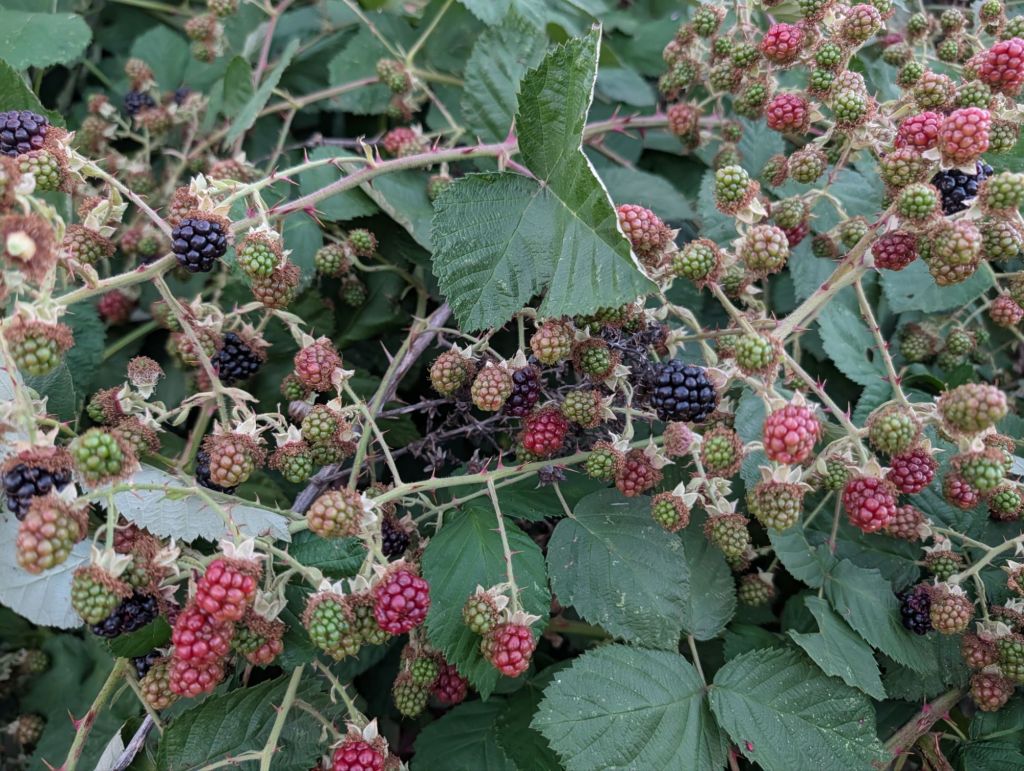
- Himalayan Blackberries (Rubus bifrons)
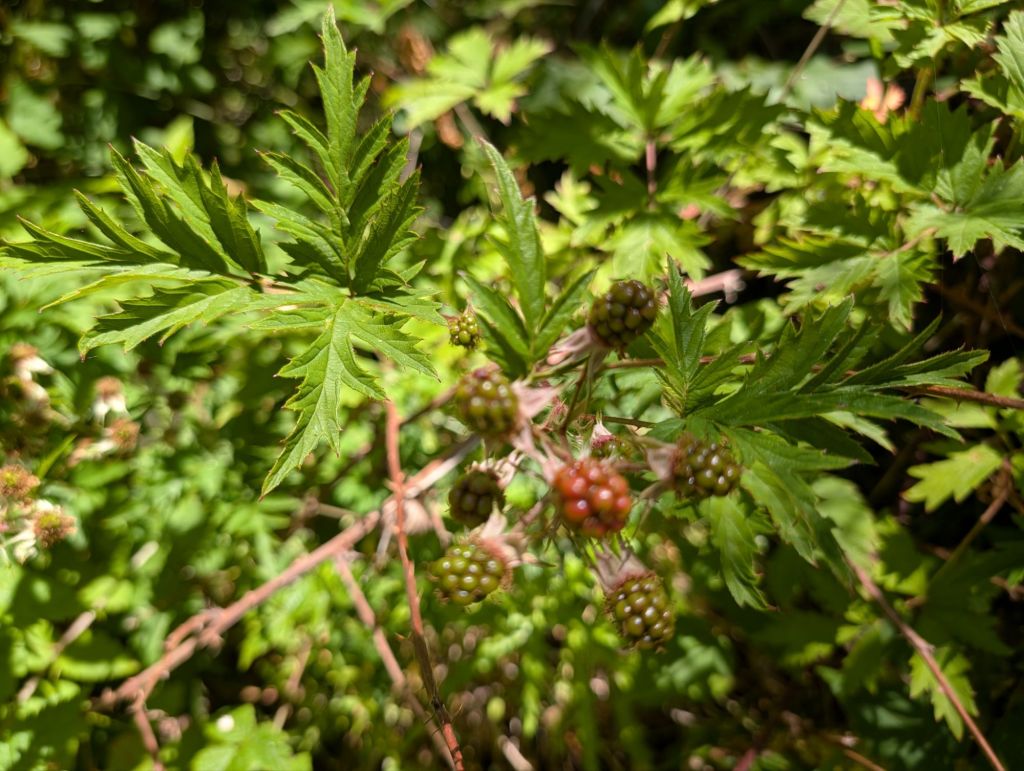
- Evergreen Blackberries (Rubus laciniatus)
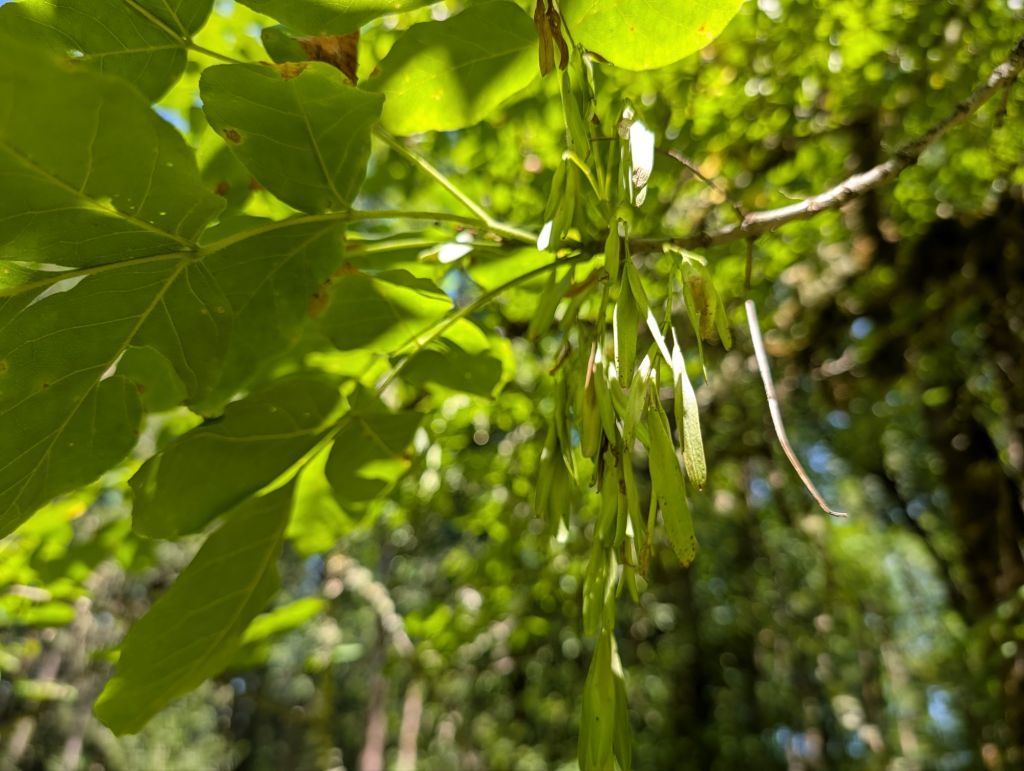
- Oregon Ash (Fraxinus latifolia)
~ The Bucket Garden: Harvesting the Bounty ~
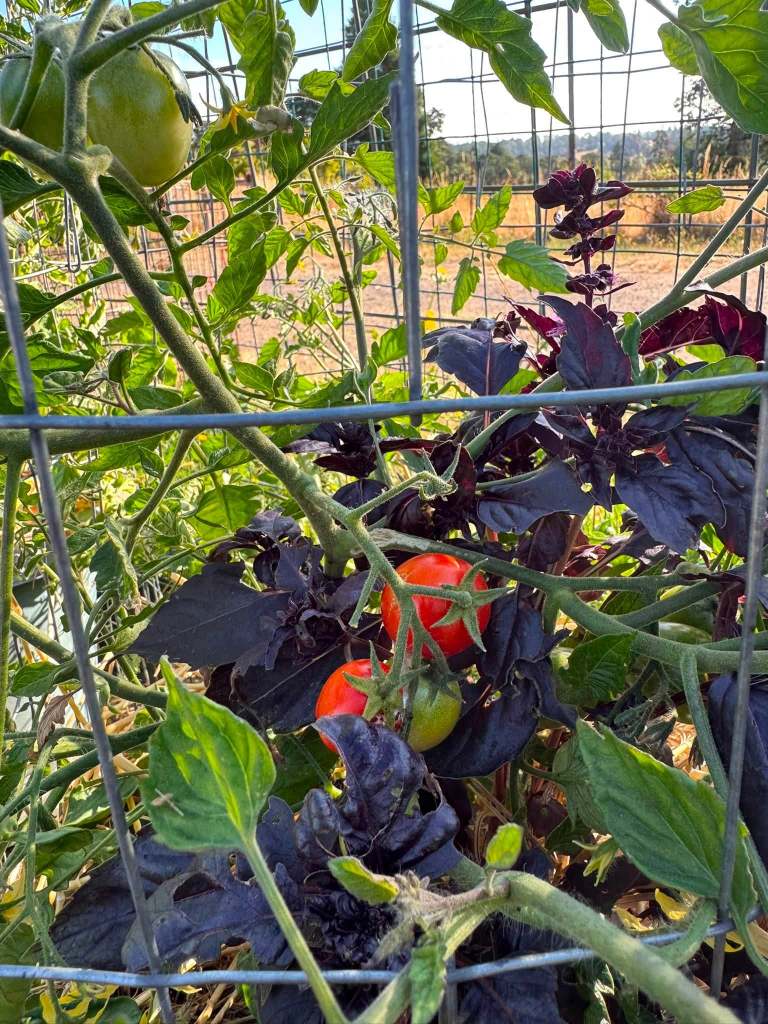
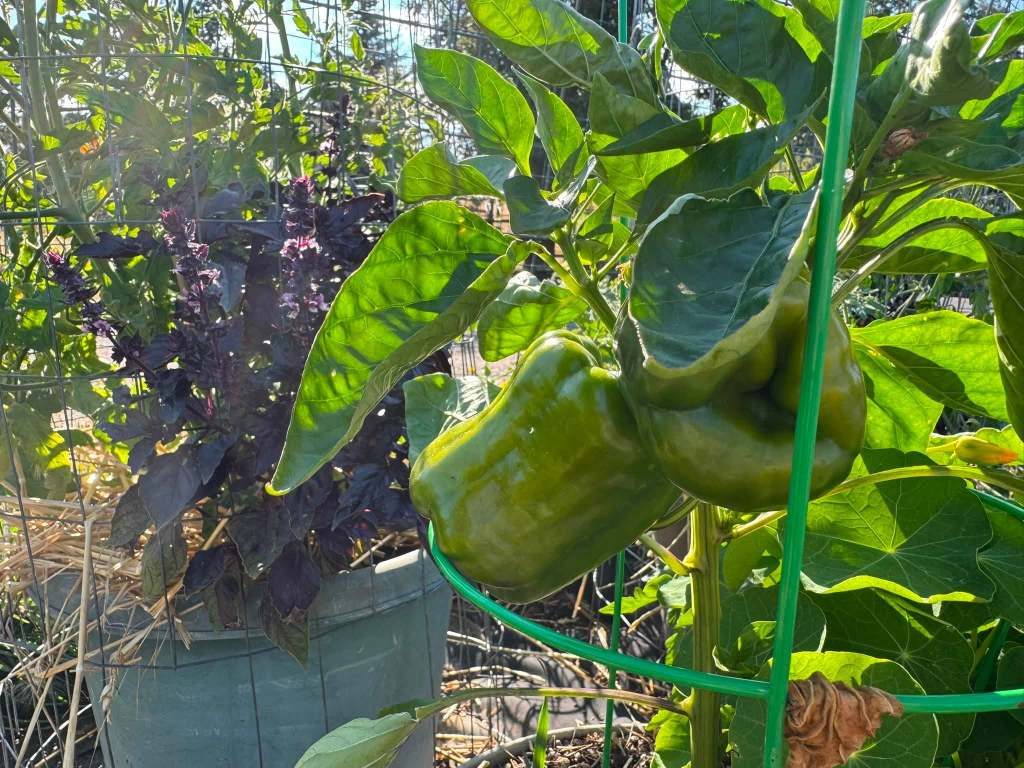
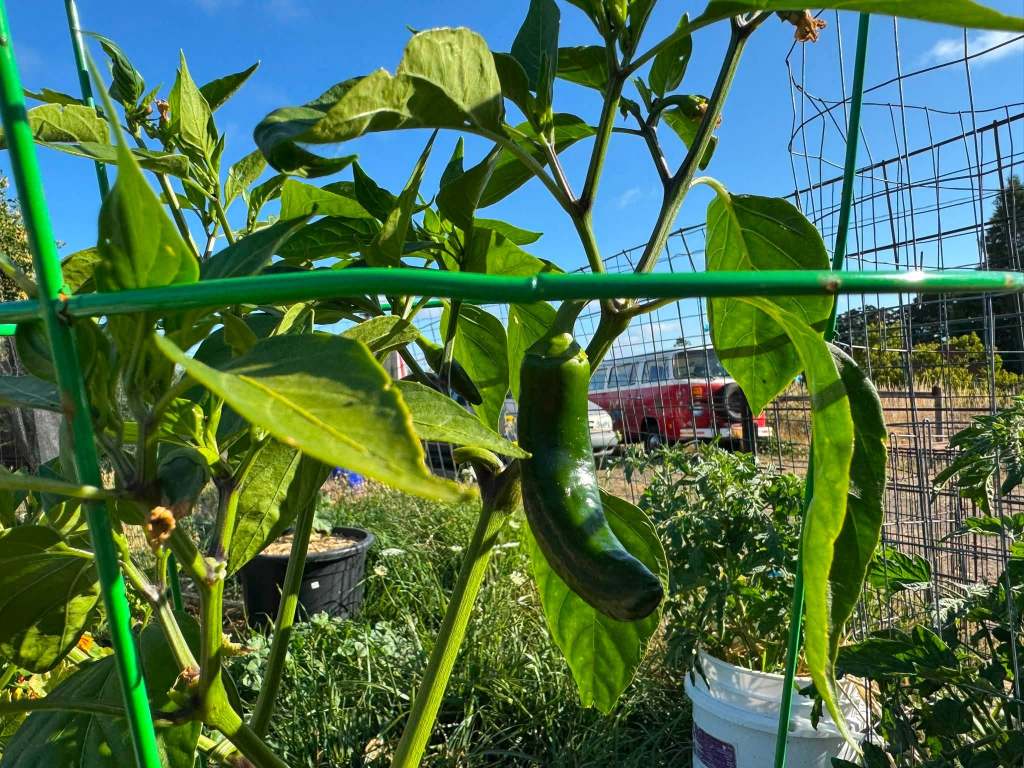
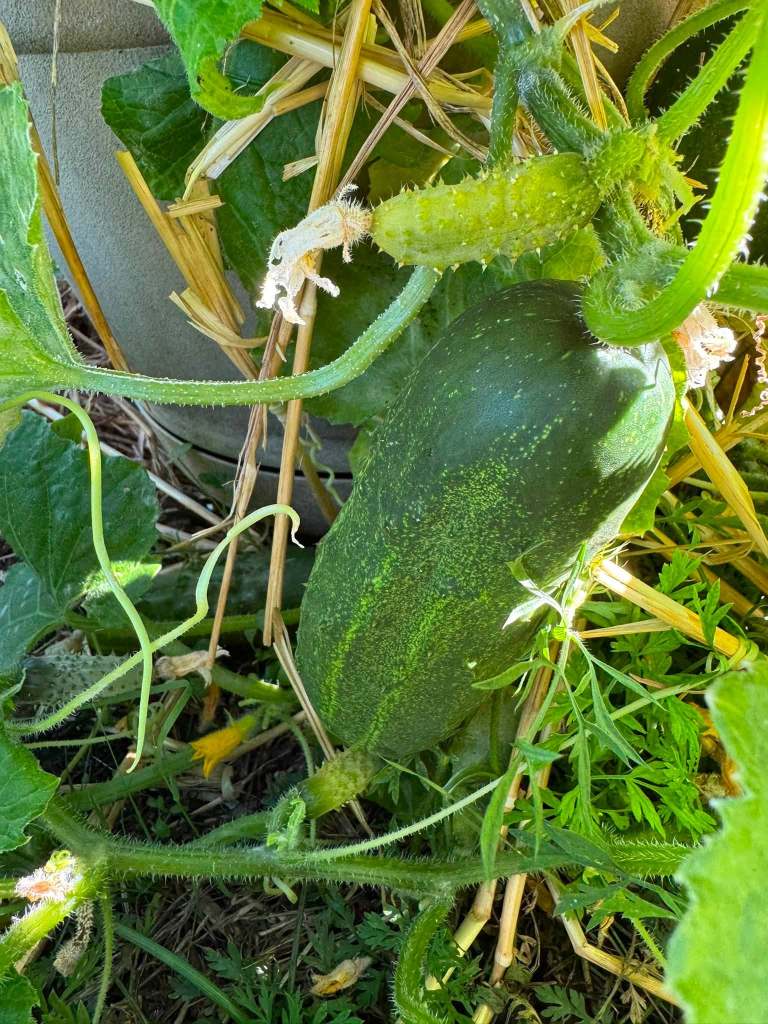
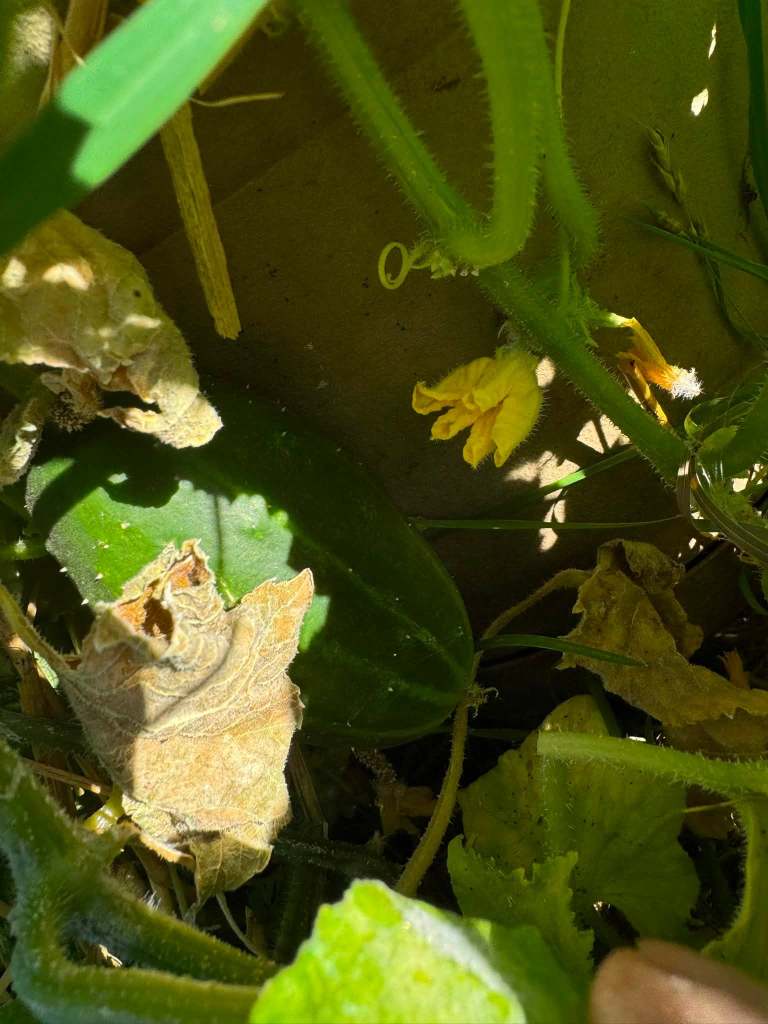
Shane’s bucket garden is going strong! He’s harvested some of the first Jalapeno peppers, Champion radishes and one cherry tomato so far! It looks like a Cucumber might be almost ready as well as some Bell Peppers.
~ Garden Guide: Phenology at Work! ~
I switched to using phenology to plan my garden, so I created a practical planting guide to help you do the same! Instead of following a rigid calendar, phenology means watching local indicator plants to know exactly when the soil is ready for your crops.
What to look for in Late-July/Early August:
– Himalayan blackberries starting to turn red (may see a few darker berries already too!).
Harvest immediately as they become ready:
– Mulberries (last call!)
– Juneberries (last call!)
– Currants (last call!)
– Gooseberries (last call!)
– Pie Cherries
– Early Blueberries
– Summer Squash
– Cucumbers
– Bush Beans
– Collard Greens
– Swiss Chard
– Carrots: They reach peak sweetness when the foliage hits 12+ inches tall and the root shoulders poking out of the soil are 3/4 to 1 inch thick.
Harvest begins shortly:
– Japanese Plums: Keep checking as early varieties may be ready very soon.
– Early European Plums
– Early Peaches
– Early Apples
– Early European Pears
– Summer Raspberries
– Red Huckleberries
– Evergreen Huckleberries
– Red Elderberries
– Onions: Watch the green, tubular tops. When the plants are ready, the stems will lose their structural integrity and naturally flop over at the soil line. Once 50–80% of the patch has flopped, it’s time to let them sit in dry soil for 1-2 weeks, then harvest!
– New Potatoes
– Beets
– Pole Beans
Fall Planting is on the Horizon!
Make sure you pay attention to what nature is doing, as the months listed are APPROXIMATE. Especially with the crazy weather we’ve experienced this past winter until now! It may seem early to start some tasks, but trust that nature knows exactly what it’s doing! Just because I am here in Molalla, OR, doesn’t mean these same indicator plants won’t work the same in other areas. FOR EXAMPLE – higher elevations or colder regions may take longer for some plants to bloom or set fruit.
Ready to garden by nature’s clock?
Now you can download and print your own copy!!
~ The Funnies: Plant & Nature Humor ~
~ The Blog: Upcoming Editions ~
We’ll see you next week on July 27th for the next Gardens & Nature, where we’ll share even more garden guidance and check out what else is blooming!
Be on the lookout August 1st for our monthly Livestock Edition, where we talk about plans for sheep breeding season!
In case you missed the latest:
Livestock Edition: July 2026
As always, I deeply appreciate every like, follow, and subscribe. You can find our social media links below!
~ Thank You!~


One thought on “Gardens & Nature: July 20, 2026”